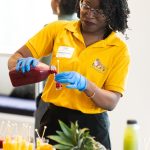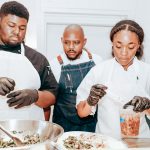
“We take responsibility for our impact on people, communities, and the environment. We also accept feedback as a gift and seek to correct any missed expectations.”
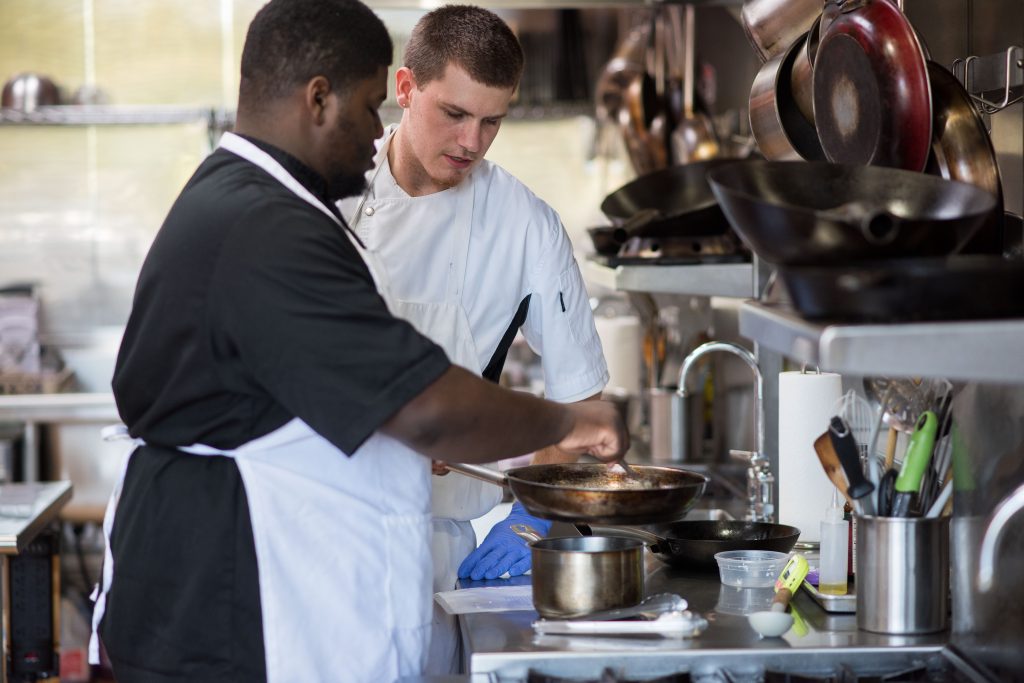
As our CCAB core values statement suggests, accountability is about living with integrity by being responsible for our decisions and actions, while remaining open to opportunities for growth and change.
Through approaching accountability in this way, it keeps us honest and aligned, leading to increased trust, reliability and confidence in relationships and demonstrating a dedication to continuous improvement.
Let’s think about this example from the culinary world.
You are at a restaurant and ordered a medium-rare steak. The server brings it out well-done which you bring to their attention. Soon after, the Chef comes out of the kitchen to apologize, acknowledging that the steak was way overcooked and offering to get you a fresh one in addition to a complimentary dessert.
Mistakes like over or undercooking a dish frequently happen in the kitchen. It is how we handle them through taking responsibility for our actions and seeking to do better that makes all the difference in a customer’s experience; and doing so encourages a routine accountability practice.
This example also highlights that accountability asks us to increase our self-awareness. By welcoming feedback and better understanding the effects of our behaviors and choices, it enables us to be more mindful with how we use our time, energy, and resources.
The most important form of accountability, then, is being accountable to oneself, just as the Chef did in this example. Through being accountable to herself, she not only enhanced the customer’s experience, but empowered herself and her team to be more aware of how they can improve to deliver exceptional food and service.
 Accountability is so important to CCAB that we infuse it into all of our programs, workshops, and classes. We teach it to students through ongoing support groups, student reflection sessions, instructor and peer-to-peer discussions, and worksheets that help students set goals and track their progress.
And in every cooking experience, our students are asked to exchange feedback and evaluate their work, providing insights that enable them to improve their delectable dishes and hone soft skills such as communication, adaptability, teamwork, and accountability. Students learn accountability is about noting what went well and where there were struggles and opportunities for growth.
As a team, we ensure accountability in all of our programs through constant communication, follow-ups with all our students, and being sure to offer genuine and helpful feedback to one another.
Through these practices and many more, our team and students continue to discover that accountability is a fundamental life and professional skill, fostering continuous improvement and ongoing success!
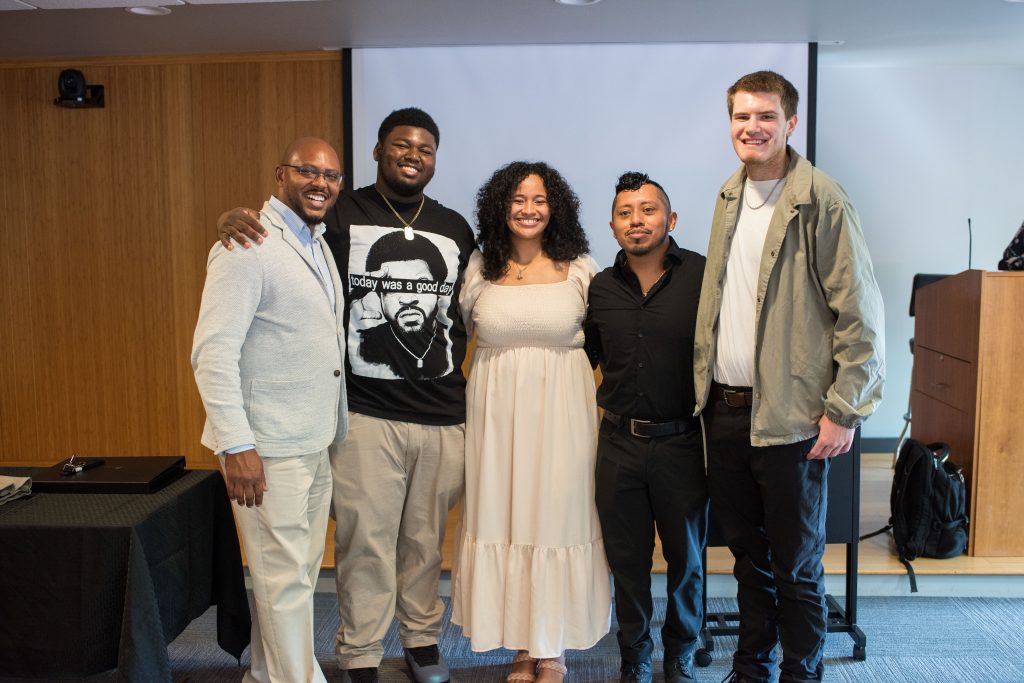
 Let’s see what Lyan Figueroa, who just graduated from our Go Cook Program, shared about accountability and her experience during the training:
CCAB: How much did you know about communication accountability prior to attending CCAB?
Lyan: Before attending the CCAB program, I had a general understanding of communication accountability as it related to my own actions and responsibilities. Having worked in kitchen and group settings in the past, I knew the importance of being accountable for my own communication. However, as the program progressed, I realized that while I was aware of communication accountability in theory, I wasn’t consistently applying it in my day-to-day life and work.
Working primarily on my own as a baker and cook, I didn’t have to regularly communicate and coordinate with others. The program helped me recognize that true communication accountability goes beyond just being responsible for my own messaging – it involves actively engaging with superiors, colleagues and clients to ensure we’re all on the same page. This was an important revelation for me as I sought to enhance my communication skills and effectiveness.
CCAB: What did you learn about accountability while in your CCAB training program?
Lyan: Through the CCAB training program, I learned the importance of taking personal responsibility for my actions and obligations when it comes to communication. The program emphasized that true accountability goes beyond just completing tasks – it’s about proactively owning your role in the communication process. Some of the key lessons I took away include:
Being clear and direct in my messaging, rather than making assumptions or leaving things ambiguous
Actively listening to understand others’ perspectives, rather than just waiting for my turn to speak
Acknowledging mistakes or missteps promptly, and taking steps to remedy them
Seeking feedback from superiors, colleagues or clients to identify areas for improvement.
The CCAB program taught me that communication accountability is an ongoing practice of personal ownership, transparency, and continuous learning. It’s not just a box to check, but a mindset that permeates all of my personal and professional interactions.
CCAB: Can you share an important experience, memory, or takeaway from the program as it relates to accountability?
Lyan: One of the most memorable and impactful experiences from the CCAB program was our team cooking exercises, particularly the individual cooks where we were each responsible for executing a specific dish. During these sessions, I realized just how much I had to learn about true communication accountability.
Prior to the program, my cooking experience had been very individualistic – I would focus solely on my own tasks and responsibilities, without much consideration for the bigger picture or how my actions impacted the team. However, the CCAB program’s emphasis on shared vision, planning, and collaboration opened my eyes.
During the individual cooks, the chefs would communicate the overall goal and vision, and then our sous chefs would check in to see how they could assist us. I was humbled to have my teammates offer to help prep parts of my dish, and I quickly learned that I couldn’t just tunnel vision on my own work. When something went wrong with an element my teammate had helped with, the chefs would ask “Who was responsible for this dish?” – and I had to own up to the fact that, even though I didn’t personally make that mistake, I was still accountable for the final outcome.
This experience was a powerful lesson in the importance of communication, teamwork, and shared accountability. I realized that true accountability isn’t just about completing your own tasks, but about aligning with the broader vision, proactively engaging your team, and owning the final result – even if parts of it weren’t directly under your control. It was a humbling but transformative experience that has continued to shape my approach to communication and collaboration.
CCAB: How has what you learned about accountability helped you in your career and or life?
Lyan: I’m not claiming I’ve got it figured out because I don’t, but I have grown. It has helped me be more realistic and honest with myself by self-evaluating, reflecting, and recognizing the areas I’m weak, but by doing so, it has made me stronger. Become a better listener and not take feedback as an attack, but an opportunity for growth.
—————————–
A very big thank you to Lyan for providing us such thoughtful insights around her experience with accountability and CCAB’s Go Cook Program. For our upcoming December post, the blog topic will be unity. Stay tuned, as we will post the blog the first week of every month!
About Culinary Concepts AB:
At CCAB, our mission is to empower people and build communities in the kitchen. We accomplish this through workforce training programs that teach essential life and occupational skills in addition to technical culinary skills. By equipping our students with this practical education, it not only fosters career development but also positions them for success in all areas of their lives. We believe that through constant pursuit of our mission, living our core values, and continuing to form strategic partnerships, we will realize our vision of providing all communities with equitable access to life and occupational skills training. Click here to learn more and get involved! https://culinaryconceptsab.com/about/